Weather and climate
In simevo we approach weather and climate projects based on devops and modern web technologies. But we also leverage our background in handling scientific data processing, and the extensive experience in this area acquired by working hands-on with different partners.
Below is a selection of recent projects in the weather and climate domain.
They are all powered by complex workflows: a typical data pipeline runs on commercial or in-house IaaS, is orchestrated with k8s and Argo CD and a workflow manager, uses OCI images to improve reproducibility, ingests raw data in GRIB or NetCDF format, post-processes them in Python, and publishes them in web formats with or without supervision (human-in-the-loop).
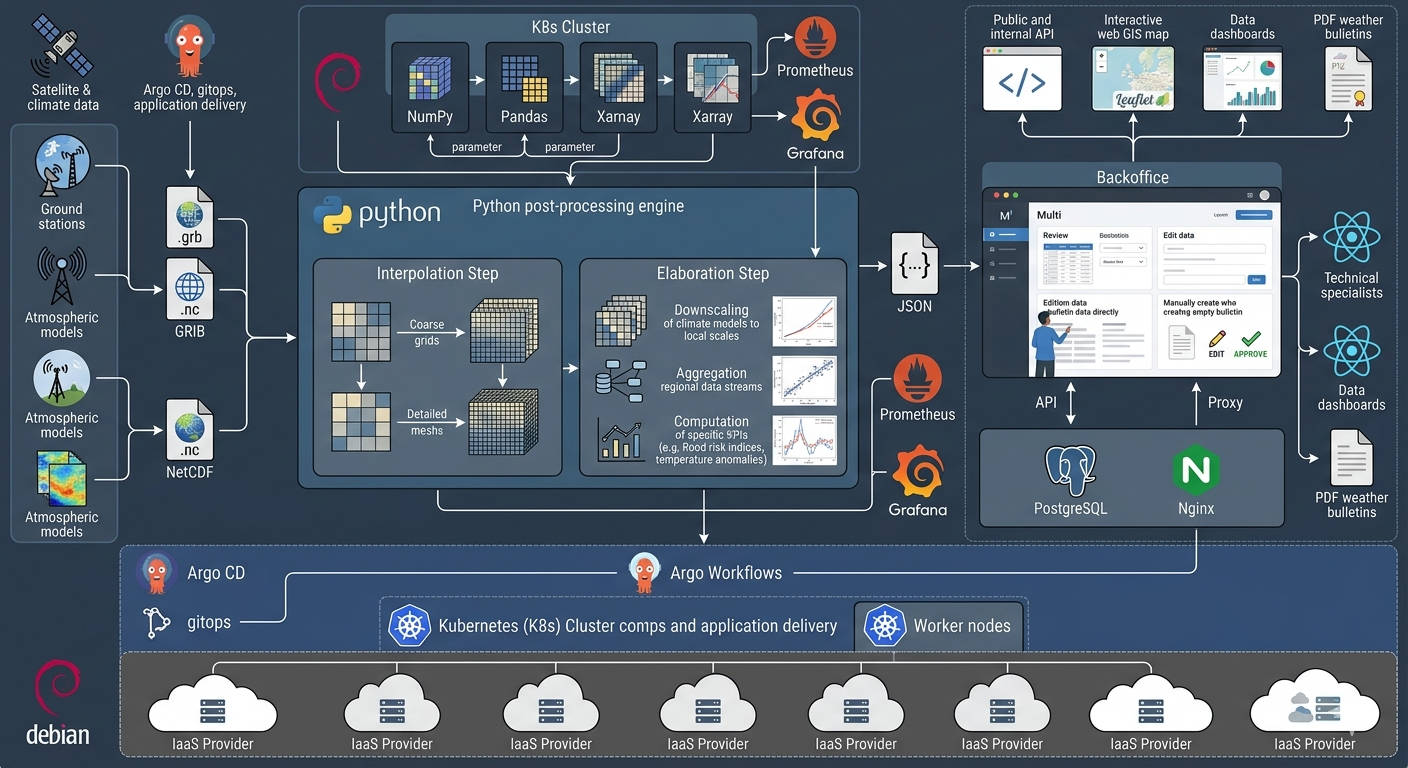
Our customers are domain specialists, and oversee the science and the core algorithms. Our contribution is making sure those algorithms run on production-grade, highly observable and resilient pipelines.
Multi - Agenzia ItaliaMeteo, 2024–ongoing
Multi is a back-office platform, composed of a web application and an API, designed for Agenzia ItaliaMeteo (AIM) to orchestrate and standardize weather and climate reporting of the whole country.
Since one of its initial goals was to provide a national overview of weather conditions in Italy, Multi aggregates meteorological data from many Italian regions, as well as from some neighboring countries. These data come from different sources and often have different formats and structures.
To avoid building brittle, hard-coded pipelines for each source, we engineered a flexible ingestion layer that maps these heterogeneous data streams into a unified, standardized schema.
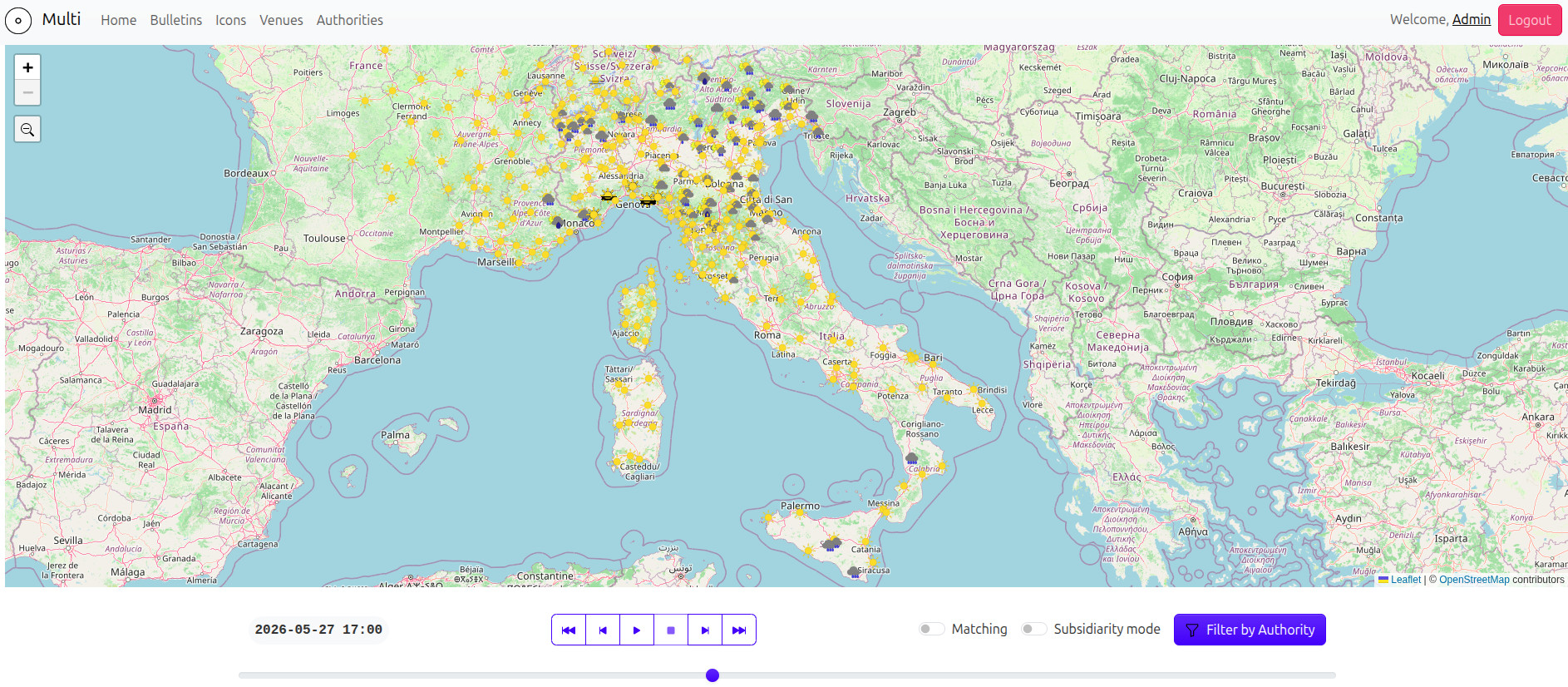
In addition to aggregating data and bulletins, Multi also allows users to edit bulletin data directly, or to create an empty bulletin of a given type and fill it in manually.
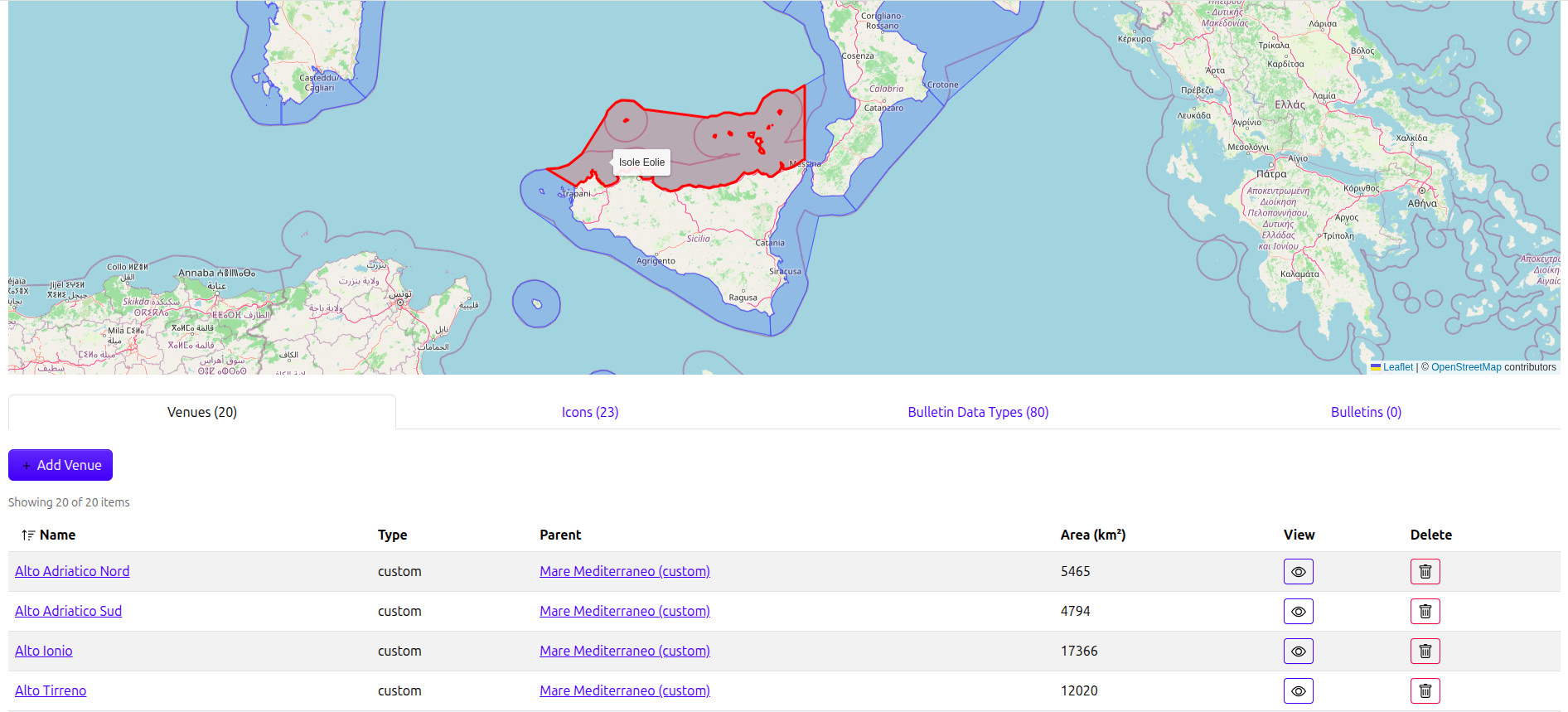
With the possibility to add new locations and areas, time ranges, and data structures, Multi supports the creation of highly specific bulletins tailored to different operational needs.
More at:
meteo.report - Euregio, 2022–ongoing
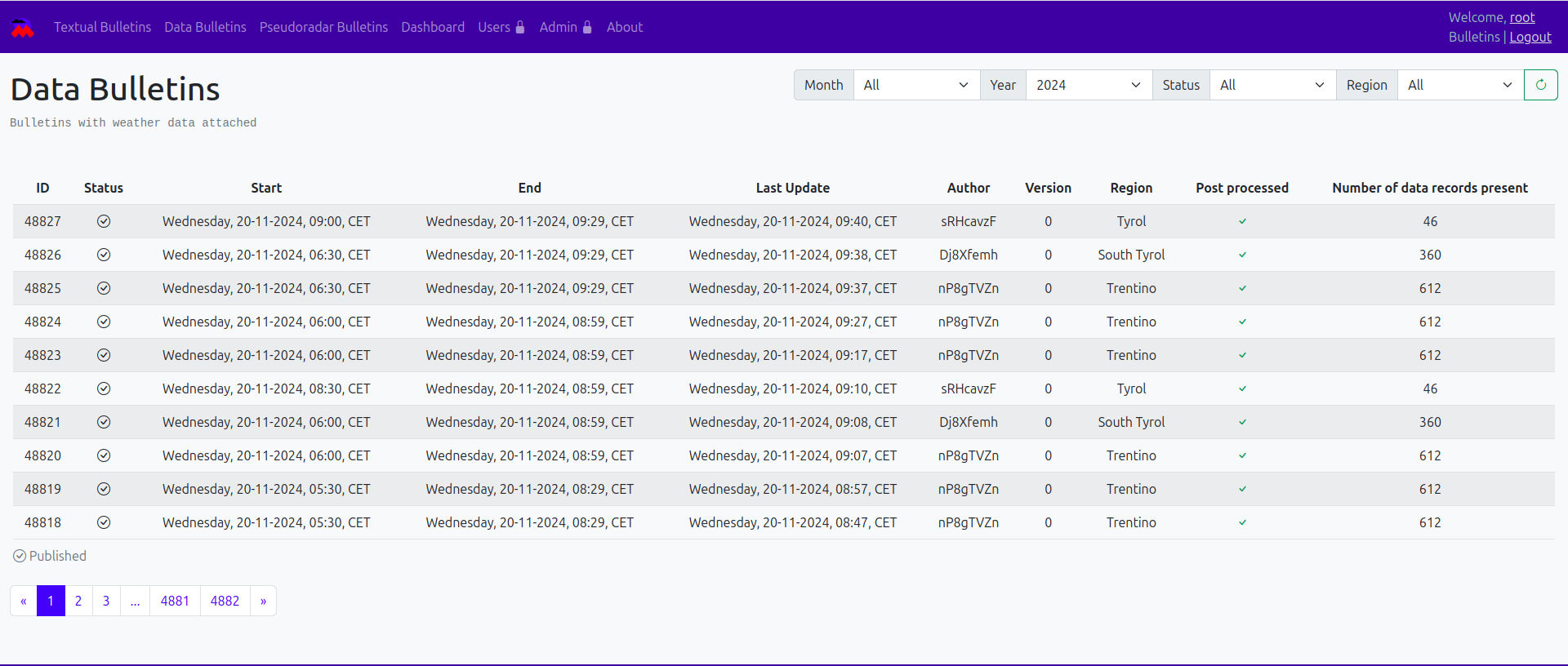
meteo.report was born in collaboration with Euregio and is a cross-border and multilingual website containing forecast and observed, numerical and raster data.
The site is statically generated in Hugo to be quick while navigating through the many contents.
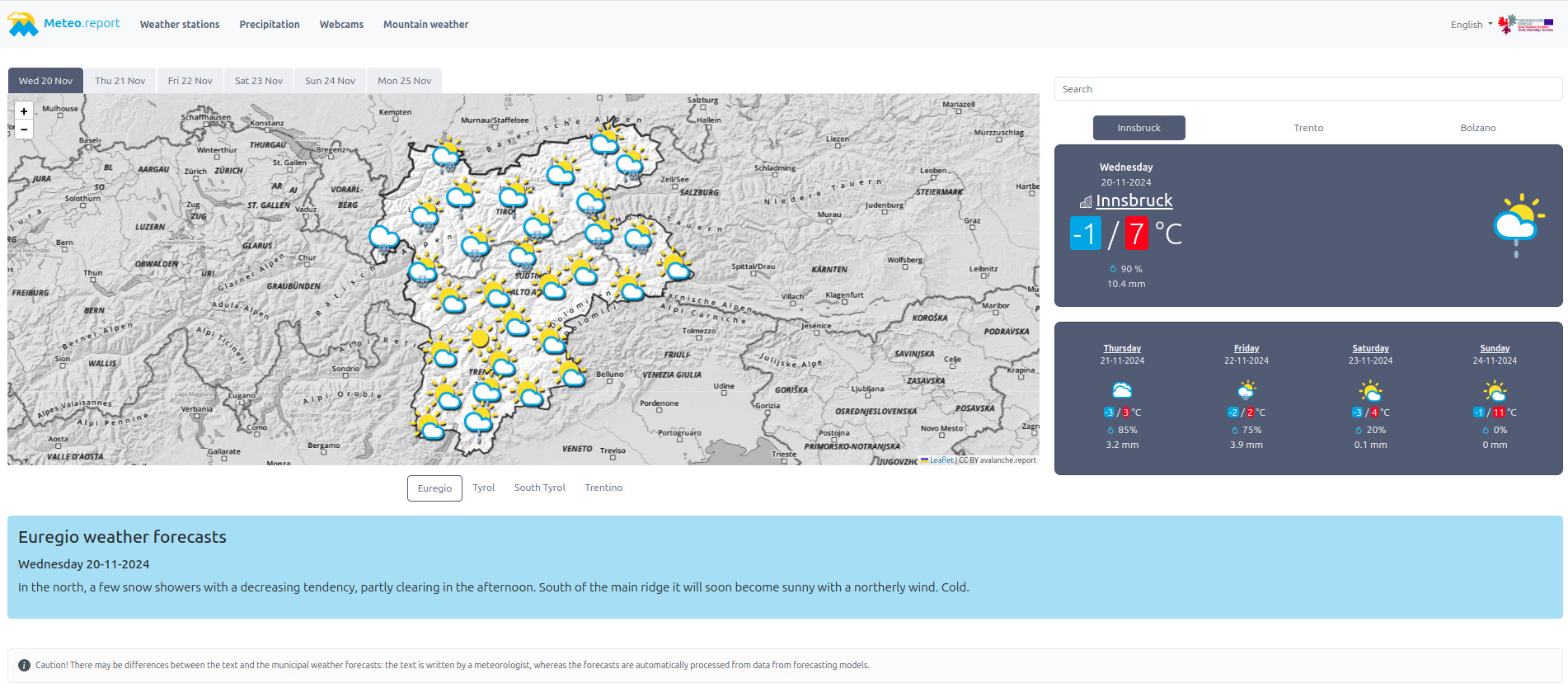
The texts and data shown on the site arrive from 3 different weather agencies (Meteo Trentino , Weather South Tyrol and GeoSphere ) of 2 different countries (Italy and Austria) via a back-office webapp developed entirely in Django: here the data is stores and transformed before landing on the public-facing webapp.
 More at:
- https://gitlab.com/tinia-euregio
- https://www.europaregion.info/it/euregio/progetti/servizi/bollettino-meteorologico-euregio/
Odino - Arpa Piemonte and DPC, 2025–2026
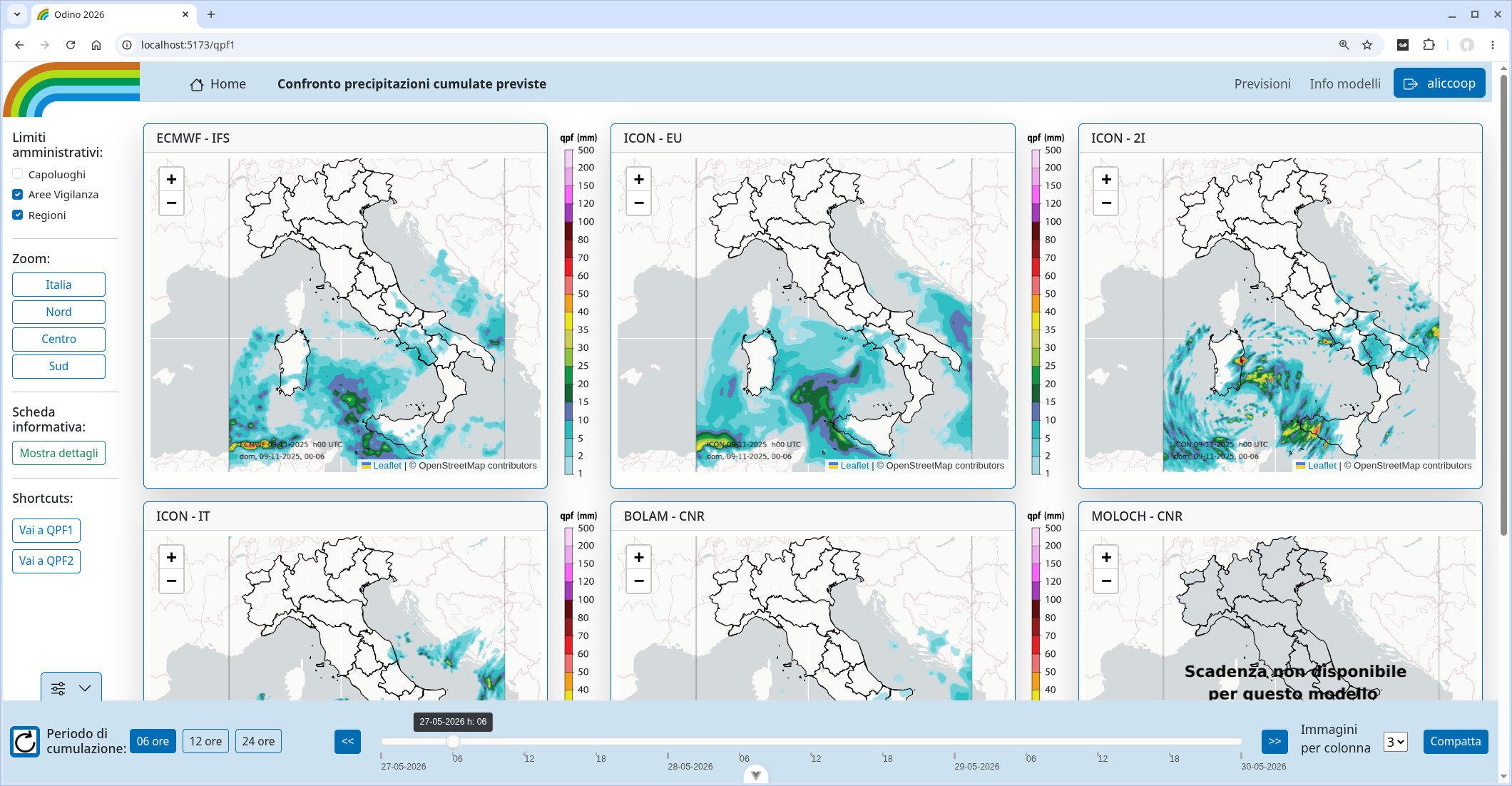
Odino is a web app designed for Arpa Piemonte and DPC (Dipartimento della Protezione Civile) to support meteorological experts in the visualization, comparison, and verification of weather model outputs.
The project started from an existing web application where the images were pre-computed on a offline backend, and then published as static files through a web interface.
We worked on modernizing this workflow by improving performance and usability, refreshing the visual interface, and introducing new interactive features for expert users.
The new version allows users to generate queryable maps, inspect map values with a click, compare multiple maps interactively, and perform calculations on the fly.
More at:
Michea - Arpa Lombardia, 2023–2024
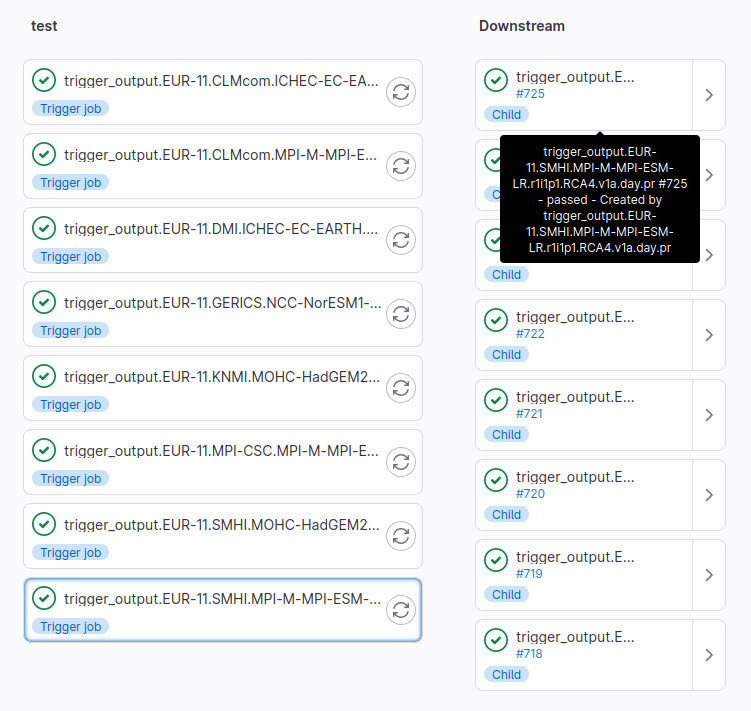
Michea is a project for Arpa Lombardia . It aims at creating a software service to acquire regional model data (Coupled Model Intercomparison Project, CMIP6) from the ESGF/CORDEX portal, process them using statistical and data science tools, and produce outputs that can also be displayed in graphical form.
By exploiting the CI/CD of GitLab we manage the flow of actions, from data acquisition to calculations, speeding up or completely avoiding redundant steps.
More at:
Weboll / Rischi Naturali - Arpa Piemonte, 2019–2024
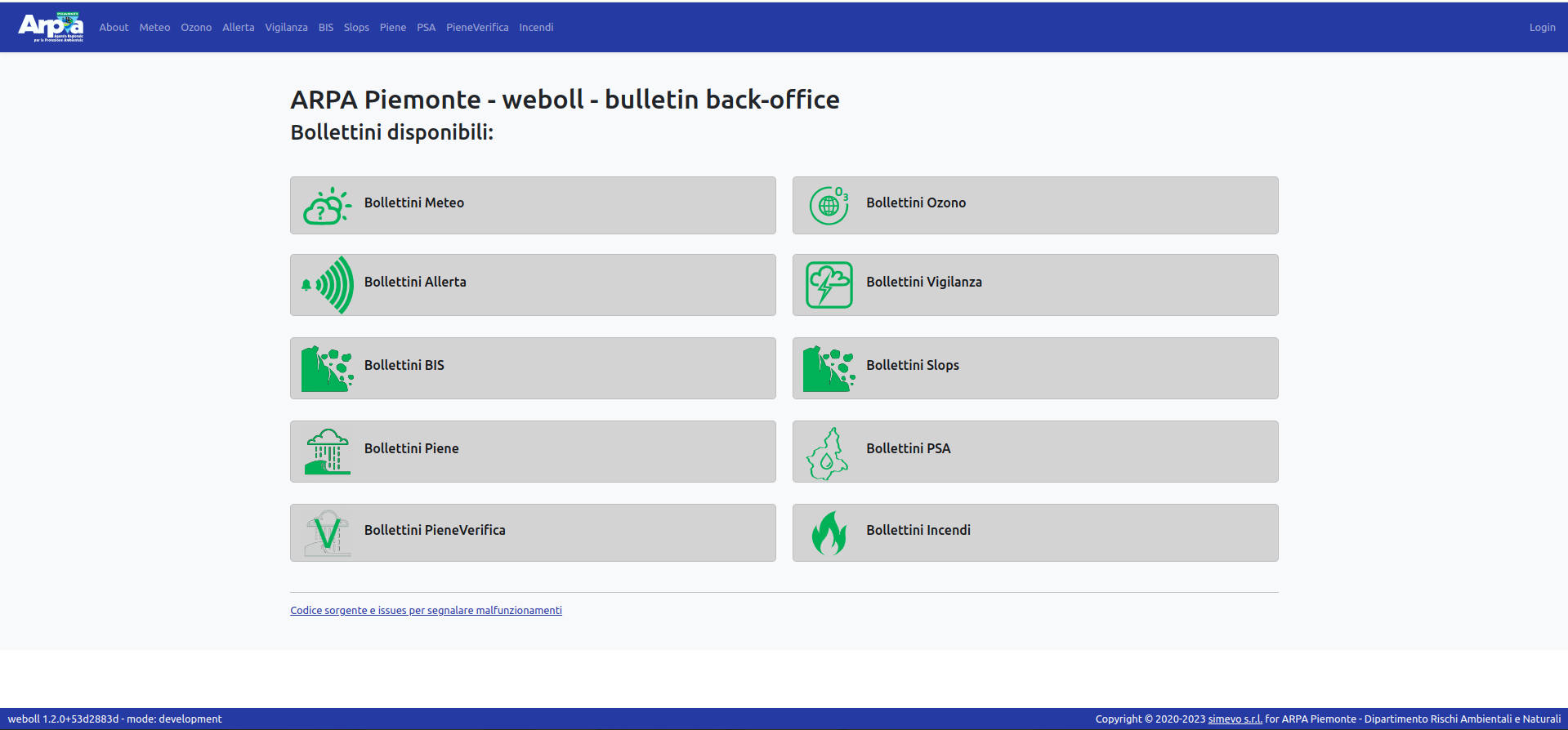
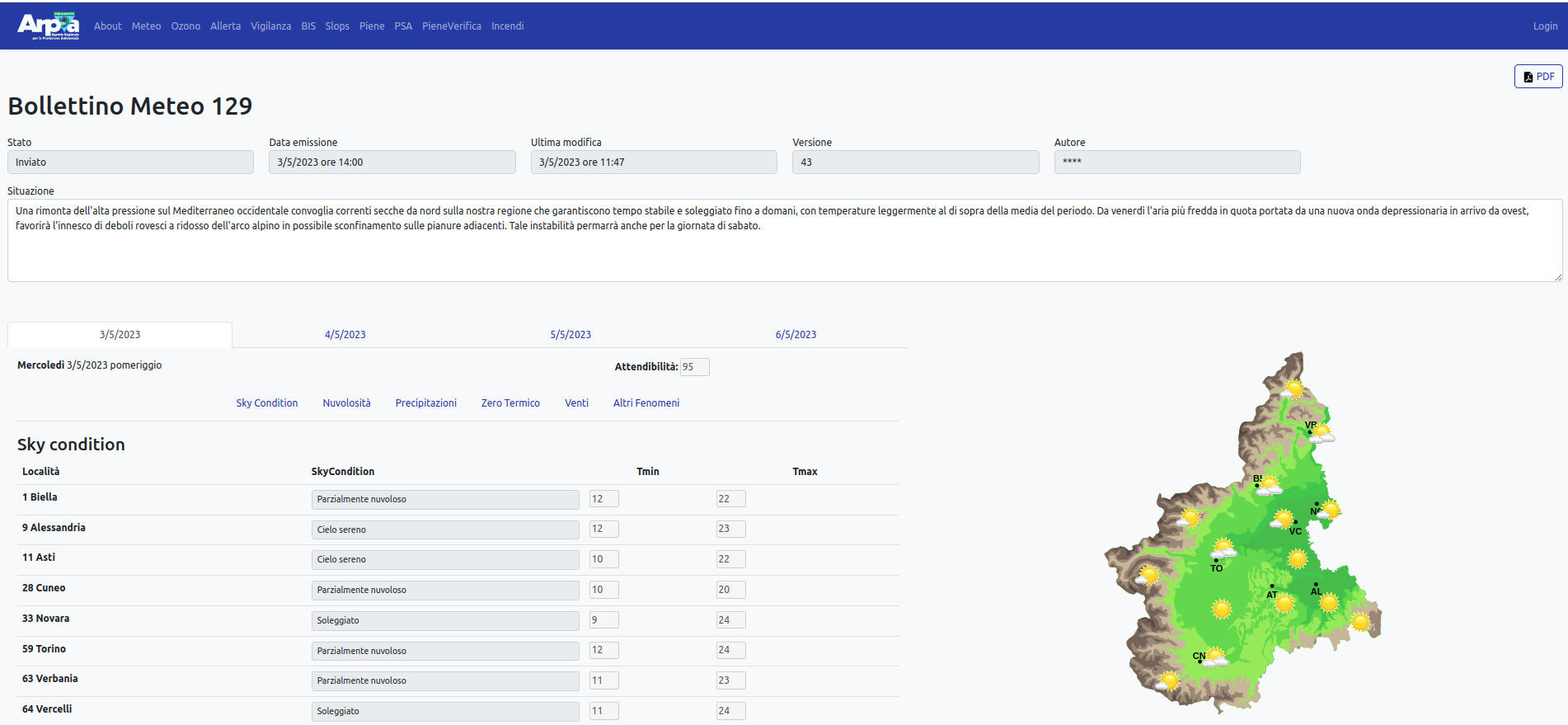
Weboll is an open source back-office platform developed for Arpa Piemonte to support the management, compilation, and publication of bulletins and operational weather content.
The project was built around Arpa Piemonte’s Rischi Naturali workflows, where a wide range of meteorological and natural-risk products are prepared by domain experts and published through dedicated sections of the agency’s website.
Starting from an existing architecture, we worked on the backend components, data pipelines, data structures, tables, charts, and publication flows that feed the public-facing website. The platform supports a human-in-the-loop workflow, allowing experts to review, edit, and finalize bulletin data before publication.
A key outcome of the project was the successful handover of the system to Arpa Piemonte’s internal team. The products built through this workflow are still in operational use today, and the internal team is able to maintain and evolve the system independently.
More at:
- https://github.com/Arpapiemonte/weboll
- https://rischinaturali.arpa.piemonte.it/rischinaturali/snippets_arpa/
- https://www.arpa.piemonte.it/
Want to know more? Get in touch with us!